Visitors: 17690432 Views
Done By: Department of Prosthetics and Orthotics Engineering
Post Date: 2026-08-27
Last Browse: 2026-11-23
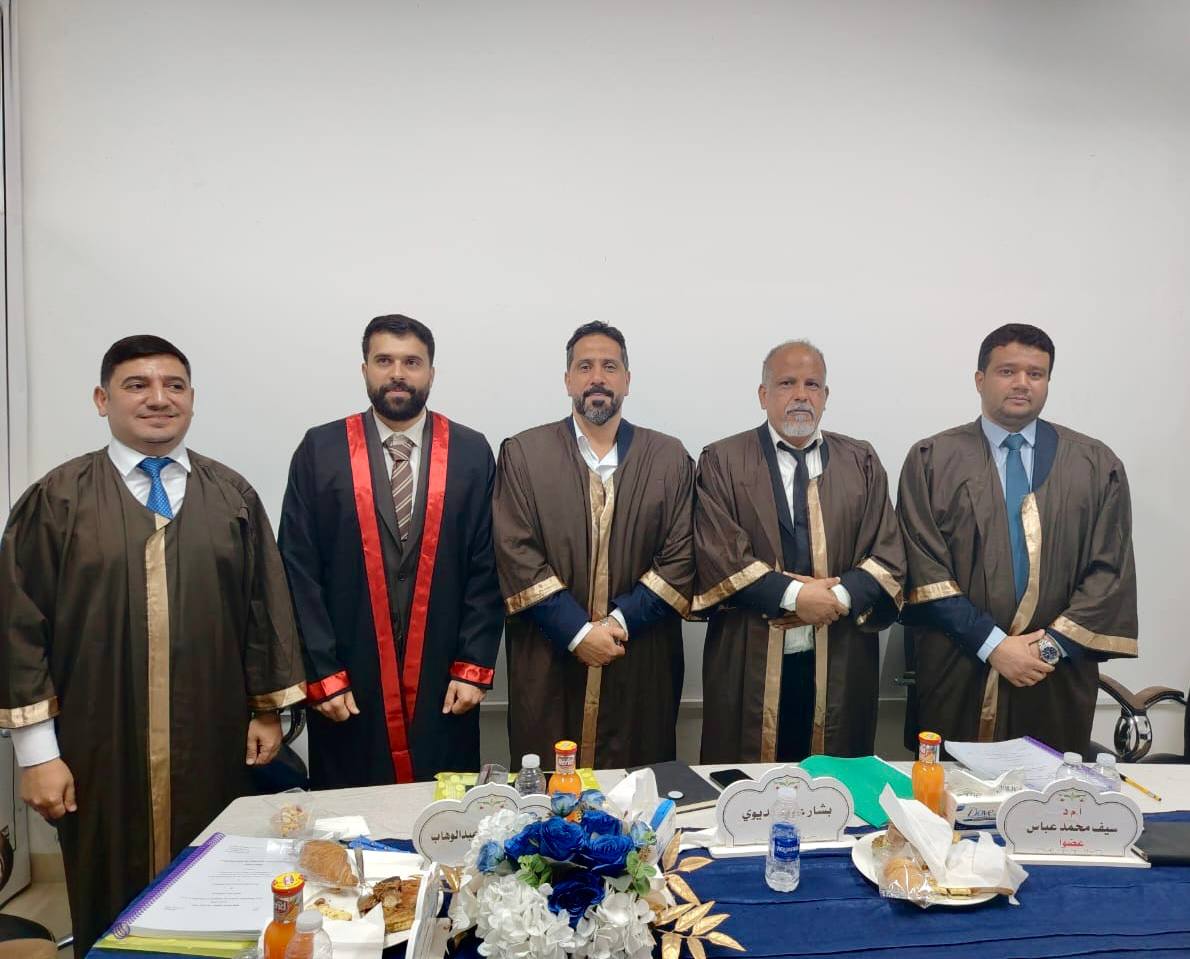
The Department of Prosthetics and Orthotics Engineering at the College of Engineering / Al-Nahrain University held a discussion of the Master’s thesis entitled “Comparison Study of Ankle-Foot Orthoses: Modern and Classic Design”, submitted by Mohammed Sattar Jabbar Aboud. The study focused on evaluating and comparing the functional and mechanical performance of two types of ankle-foot orthoses used in gait rehabilitation for a post-stroke patient suffering from foot drop. The distinguished discussion committee consisted of: The study adopted a scientific methodology combining clinical assessment with engineering analysis and included: Gait Assessment and Analysis: The patient’s gait was compared under three conditions: walking without an orthotic device, using a Traditional AFO custom-made for the patient, and using a Readymade AFO. Gait Parameter Analysis: The G-Walk system was used to analyze spatial and temporal gait parameters, in addition to a Force Plate to evaluate ground reaction forces, balance, and load distribution. Numerical Analysis and Simulation: Numerical analysis was conducted using ANSYS to investigate the stresses and deformations experienced by both orthotic devices during different phases of the gait cycle. The study showed that both orthotic devices provided functional benefits in improving gait performance, with differences in their performance characteristics. The custom-made traditional device provided better mechanical stability, improved alignment control, and more effective load distribution, while the readymade device offered greater flexibility and ease of limb movement. The study emphasized the importance of selecting the appropriate ankle-foot orthosis according to each patient’s functional and mechanical needs, while integrating clinical assessment with engineering analysis to achieve more accurate decisions in rehabilitation and the selection of suitable orthotic devices.
At the conclusion of the discussion session, the thesis and its findings were evaluated by the committee, reflecting the scientific efforts made by the student and supervisor in completing the study.
Key Aspects and Methodology of the Study
Key Findings and Conclusions