Visitors: 27162044 Views
Done By: Engineering Architectural Department
Post Date: 2026-01-16
Last Browse: 2026-07-27
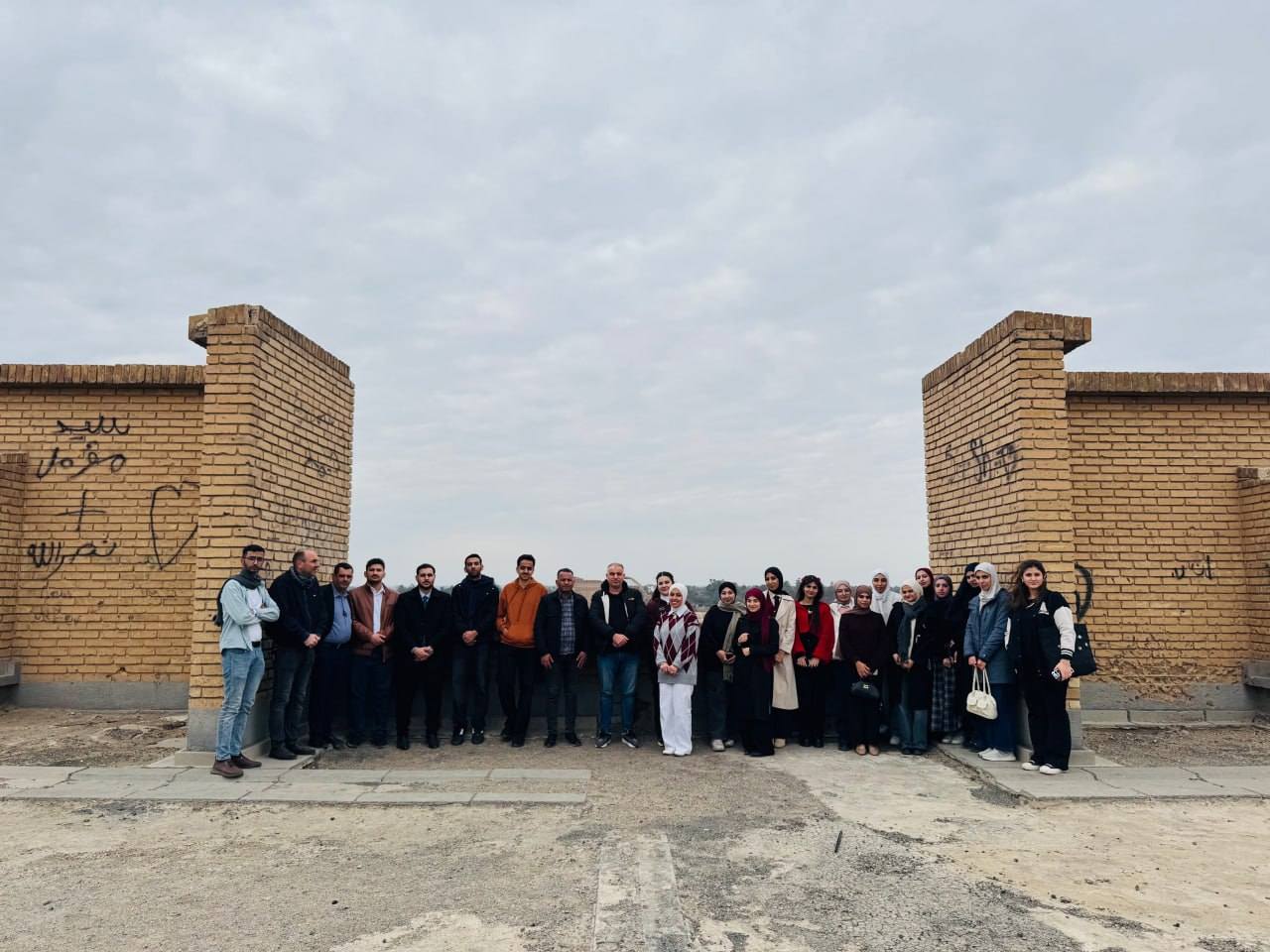
The Department of Architectural Engineering at Al-Nahrain University organized a field trip for first-year students to the Taq-i Kisra (Arch of Ctesiphon).The students were accompanied on this visit by Assistant Professor Dr. Omer Khalid Al-Kerbooli, Assistant Lecturer Essam Ibrahim Mohammed, Assistant Lecturer Ahmed Makki Hammoudi, and Mr. Adel Sayed Jassim.The students learned about this ancient Persian landmark, which employed advanced architectural and construction techniques in past centuries. This structure is the largest brick-roofed hall of the Taq-i Kisra, constructed without supports or reinforcement. It is the largest brick arch without supports in the world. The Taq-i Kisra is considered an architectural marvel for several reasons, including its open longitudinal arch, which is approximately 37 meters high and 26 meters long, the largest unsupported brick arch in the ancient world. Sasanian engineers also used interlocking arches to distribute weight without columns. The structure was oriented westward to receive natural light, and its design allowed for ventilation and air circulation within the hall.This site holds religious significance as its splitting coincided with the birth of the Prophet Muhammad (peace and blessings be upon him and his family and companions). The Arch of Ctesiphon (Taq-i Kisra) split at the birth of the Prophet, causing the palace to shake and fourteen of its balconies to collapse.A visit was also made to the Qadisiyah Panorama site. The site includes the building itself, which houses four halls prepared to house an antiquities and heritage museum, a cinema for screening historical films, a library, a meeting hall, and administrative, security, and service facilities. The Qadisiyah Panorama was the fifth of its kind in the world, with two in the former Soviet Union (Moscow and Leningrad), one in Belgium, and one in North Korea.The visit aimed to introduce students to the scientific and historical importance of antiquities and how ancient civilizations utilized engineering concepts and methods of implementation using the materials available to them at the time.This visit is considered one of the activities that enhances both the theoretical and practical aspects of the student's understanding, especially for first-year students, helping them grasp the department's vision and objectives.


