
Visitors: 27133982 Views
Done By: Unmanned Aerial Vehicle
Post Date: 2026-04-20
Last Browse: 2026-07-26
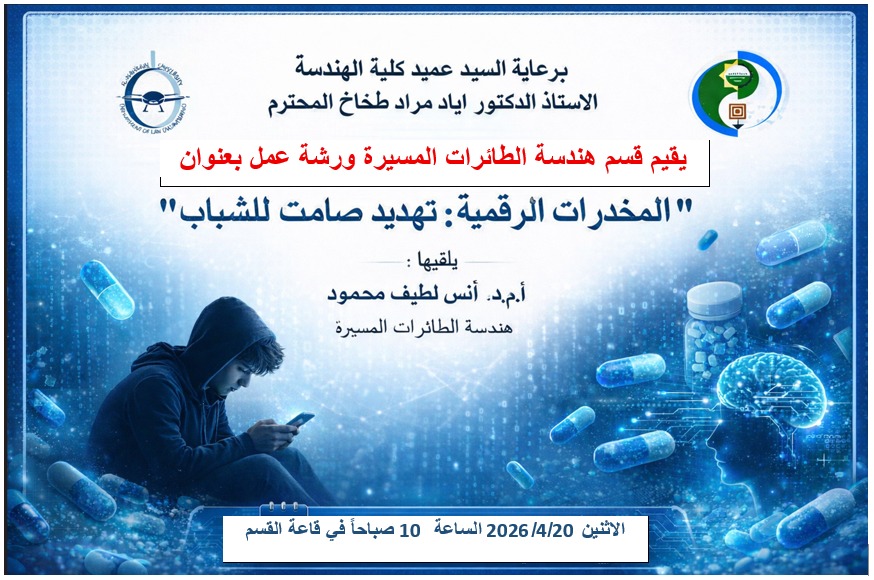
Under the patronage of the Dean of the College of Engineering, Professor Dr. Ayad Murad Takhakh, the UAV Engineering Department at the College of Engineering, Al-Nahrain University, organized a scientific workshop on Monday, April 20, 2026, entitled “Digital Drugs: A Silent Threat to Youth.” The workshop was presented by Assistant Professor Dr. Anas Latif Mahmoud and attended by a number of faculty members and students. The workshop aimed to highlight the phenomenon of digital drugs as a modern challenge linked to technological advancements, and the potential psychological, behavioral, and health effects they may have on young people. It also addressed mechanisms for preventing and reducing their spread. During the workshop, the presenter discussed the concept of digital drugs and how they work, explaining that they rely on specific audio effects broadcast through headphones to influence brain waves, which can lead to changes in mood and cognitive function. He also reviewed the most prominent risks associated with their excessive use, including social isolation, impaired concentration, and sleep disturbances. The workshop witnessed significant interaction from attendees through questions and comments, emphasizing the importance of community awareness and strengthening the educational role of families and educational institutions in protecting youth from these harmful phenomena. At the conclusion of the workshop, participants issued several recommendations, most notably the need to intensify awareness campaigns, encourage scientific research in this field, and hold regular educational activities to raise student awareness. This workshop is part of a series of scientific activities organized by the College of Engineering at Al-Nahrain University to keep pace with scientific and technological advancements and enhance awareness of contemporary issues affecting society. Recommendations: 1. Enhancing Community Awareness: Launching ongoing awareness campaigns to explain the concept of digital drugs and their health and psychological risks, especially among youth and students. 2. Integrating the Topic into Curricula: Recommending the inclusion of digital drug awareness concepts in university and school curricula, particularly in technical and engineering disciplines. 3. Organize regular workshops and training courses: Conduct regular workshops and educational seminars to enhance scientific understanding of this phenomenon and methods of prevention. 4. Strengthen family and educational oversight: Raise awareness among parents about the necessity of monitoring their children's use of electronic devices and the internet and guide them towards safe use. 5. Collaborate with relevant authorities: Emphasize the importance of cooperation between universities, health institutions, and security agencies to monitor this phenomenon and develop strategies to mitigate it. 6. Encourage scientific research: Support studies and research that address the effects of digital drugs on the brain and behavior, especially in Arab societies. 7. Launch digital awareness platforms: Create websites or applications that provide reliable scientific content about digital risks and offer psychological counseling to young people. 8. Activate the role of the media: Call upon media outlets to highlight this phenomenon in a scientific manner, avoiding both exaggeration and downplaying its significance. 9. Provide psychological support: Establish psychological counseling centers or units within universities to assist students at risk of being influenced by this phenomenon. 10. Enact legislation and regulations: Work to develop legal controls that limit the spread of content related to digital drugs on the internet.


